
How it works
Source, workbench, library — and why the original takes no damage on the way.
The most important rule first
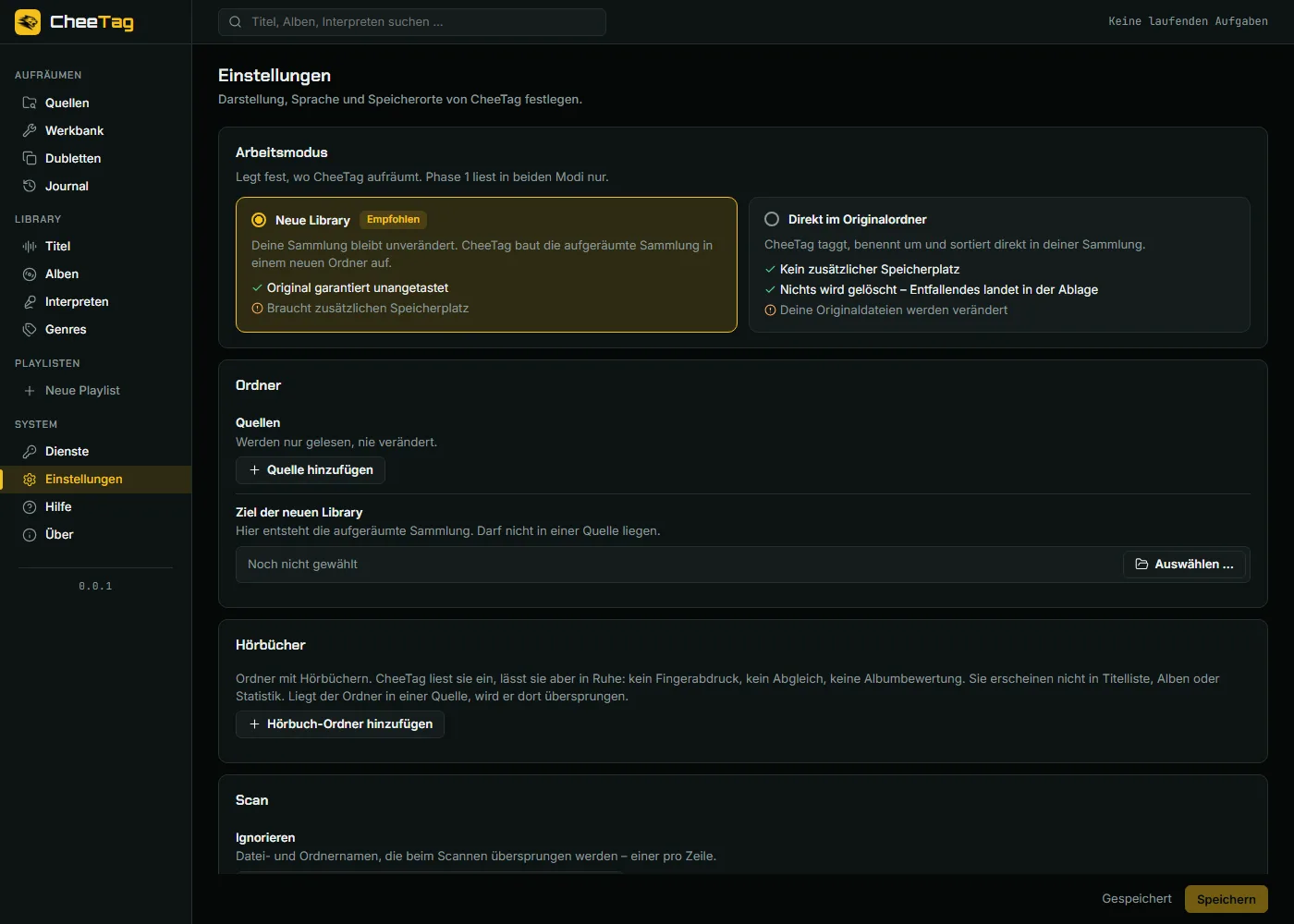
The original is never touched. In the default mode, CheeTag only reads the old collection, and a new, cleanly sorted library grows next to it, piece by piece. If you don't have the disk space for that, you can clean up directly in the original folder — then nothing is deleted, it is moved to a holding folder instead, and every change can be undone.
The five steps
- Capture — every file is read: format, tags, cover and a checksum over the pure audio data.
- Identify — the fingerprint goes to AcoustID, the matches are checked against MusicBrainz. The result is a suggestion with a match score.
- Review — album by album, before and after side by side. The machine suggests, the human decides.
- Apply — copy, tag, add the cover, name it properly.
- Verify — the new file is read once more. Only when the tags are right and the music is bit-for-bit identical is a track done.
Calmly, piece by piece
Everything runs as background work that can be stopped and resumed. You can do twenty albums today and carry on in three weeks — the progress is always in view.
New music afterwards
Once the library is up, new music arrives through an inbox folder: copy it in, read it, review, confirm. If the album is already there, CheeTag offers to replace the weaker copy — and moves the old one to the holding folder rather than the recycle bin.